How to Charge an Electric Hire Car in Northern Ireland
An explanation of charging an electric rental in Northern Ireland, including connectors, AC and DC charging, payment systems and charging sessions.
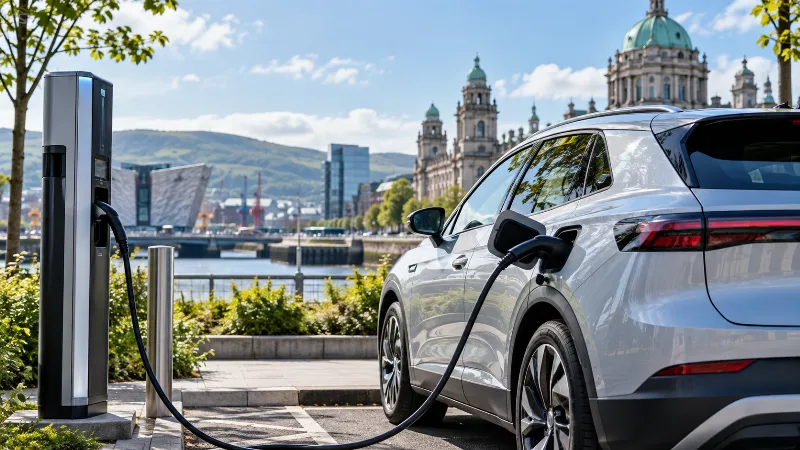
Charging an electric hire car in Northern Ireland involves connecting the vehicle to compatible equipment and starting a session through the charging operator’s payment or access system. Electricity is transferred to the battery, and the vehicle displays the developing state of charge. The equipment, connection and payment method depend on the car and the charging location.
AC Charging and DC Charging
Public charging equipment supplies either alternating current, known as AC, or direct current, known as DC. With AC charging, the vehicle’s onboard charger converts the electricity for storage in the battery. DC equipment supplies direct current to the battery through the vehicle’s charging system.
AC equipment is often associated with longer parking periods. DC charging is commonly used for a shorter charging stop during a journey. The actual charging time depends on both the equipment and the vehicle rather than the charger’s advertised power alone.
Connectors and Charging Cables
Connector type describes the physical connection between the car and charging equipment. ESB identifies Type 2, CCS and CHAdeMO among the connections used on its network. The connection suitable for a rental vehicle is determined by the model supplied.
Some chargers have an attached cable. These are described as tethered units. Other equipment provides a socket and requires a separate cable, described as untethered charging. Where a rental includes a cable, it is listed with the vehicle’s supplied equipment.
The charge port may be positioned at the front, rear or side of the car, depending on the model. This affects the position of the vehicle within a charging bay and the distance between the port and the charging unit.
Finding Charge Points in Northern Ireland
Charging maps organise information by location and equipment. Filters may include connector type, charging power and network. The operator’s listing provides the relevant description of the unit, while live status information indicates its reported operational state at that time.
ESB’s charge-point map covers its network, including Northern Ireland. The ecar connect app provides location information and functions for starting, stopping and tracking sessions. Northern Ireland also has charge points operated by other commercial providers, with access arranged through their respective services.
Starting and Ending a Charging Session
The sequence for starting a session is shown on the charging equipment or in the operator’s app. Depending on the system, it involves a cable connection and authorisation through an app, access card or contactless payment facility. The equipment and vehicle then indicate when power is being delivered.
During a session, the display may show elapsed time, energy delivered, charging power or battery percentage. Not every display presents the same information. The session ends through the relevant controls, after which the connector is released in accordance with the equipment and vehicle instructions.
A session record can contain the charger identification, start and finish times, energy delivered and payment total. The record belongs to that charging transaction and is separate from the rental company’s vehicle return record.
Charging Speed and Battery Percentage
Charging power is measured in kW, while the amount of electricity delivered is measured in kWh. A charging unit’s rated power describes its capability. The car controls how much power it accepts, subject to its charging system and battery conditions.
ESB’s charging guidance explains that battery size and temperature influence charging performance. Power commonly reduces as the battery approaches a high state of charge. Consequently, two sessions lasting the same amount of time may deliver different amounts of energy.
Electricity, Parking and Occupancy Charges
The electricity tariff is one part of the charging arrangement. A location may also apply a parking fee, and the charging operator may apply a time-related or overstay charge under its published conditions. These charges relate to different services: electricity delivery, use of the parking space and occupation of charging equipment.
Charging at accommodation can use a separate billing arrangement established by the property. The resulting cost may therefore differ from the tariff at a public roadside or car-park unit. The tariff displayed for the individual session establishes the electricity pricing applicable to that transaction.
Related content
Electric Car Hire Costs in Northern Ireland: What to Budget For
A breakdown of electric rental costs in Northern Ireland, covering the hire price, electricity calculations, parking, deposits and return charges.
Electric Car Hire in Northern Ireland
Electric vehicle rental in Northern Ireland, including Belfast collection locations, vehicle categories, charging arrangements and rental terms.
First-Time Electric Car Hire in Northern Ireland: From Collection to Return
An overview of a first electric rental in Northern Ireland, describing the booking record, vehicle handover, dashboard information, charging and return.
Electric Car Hire in Belfast
Planning an electric rental car journey in Belfast and across Northern Ireland.
Belfast to Dublin in an Electric Hire Car: What to Check Before You Go
Belfast-to-Dublin electric rental travel explained, including cross-border agreements, charging networks, payment arrangements and one-way returns.
Electric Car Driving in Belfast and Beyond
Charging, range and practical planning for an electric rental in Northern Ireland.