Belfast to Dublin in an Electric Hire Car: What to Check Before You Go
Belfast-to-Dublin electric rental travel explained, including cross-border agreements, charging networks, payment arrangements and one-way returns.
A journey from Belfast to Dublin in an electric hire car combines cross-border rental arrangements with travel between Northern Ireland and the Republic of Ireland. The rental agreement governs the vehicle’s permitted use, while charging operators govern access to their equipment and payment for electricity.
A return journey to Belfast and a one-way rental ending in Dublin are separate booking arrangements. The collection and return locations establish the structure of the reservation, including any services associated with travel across the border.
Cross-Border Use of a Belfast Rental
Cross-border rental terms describe travel from Northern Ireland into the Republic of Ireland. They can include authorisation, vehicle-category conditions, a fee and arrangements for assistance. These terms belong to the supplier and the particular booking.
Enterprise’s Belfast International Airport branch page publishes cross-border conditions, including arrangements for Northern Ireland rentals travelling into the Republic. Avis’s Northern Ireland terms also address advance agreement and a cross-border fee. These examples illustrate supplier policies rather than a single charge applicable to all rentals.
The car’s electric powertrain and its permission to travel across the border concern different matters. Charging access is provided through the electricity network. Permission to use the rental vehicle in the Republic is established through the rental agreement.
A Return Trip and a One-Way Booking
A Belfast collection followed by a Dublin visit and a Belfast return retains the original Northern Ireland handover location. The rental period includes both parts of the journey and any travel undertaken during the stay in Dublin.
A one-way booking changes the final handover location. It is priced and accepted as a separate arrangement, with its own receiving branch and return conditions. Avis’s Northern Ireland terms distinguish one-way rentals from cross-border use, including arrangements for a return in the Republic.
The distinction also affects the final charging stage. A car returning to Belfast completes that stage in relation to the Northern Ireland branch. A car accepted for return in Dublin completes it in relation to the receiving location named in the reservation.
Charging Networks Across the Border
ESB operates public charging infrastructure across the island of Ireland. Its network services provide location information and charging access through the relevant payment arrangements. Other charging providers operate their own equipment and account systems.
A charging location is described through its connector, power rating, operator and access arrangements. For a rental vehicle, the connector and accepted charging power relate to the actual model supplied. The same journey can therefore involve different charging equipment when undertaken in different rental models.
Charging near accommodation can take place during a longer parking period. Charging during travel forms a separate stop within the journey. Access hours, parking arrangements and the method of starting a session are properties of the individual location.
Tariffs, Currency and Session Records
Northern Ireland and the Republic use different currencies for everyday transactions. Charging networks publish the tariffs and billing arrangements that apply to their services. ESB’s pricing information includes separate Northern Ireland details and information about billing currency.
A charging receipt records the transaction conducted through the chosen payment service. It can include energy delivered, session duration and the total charged. Parking payments may be administered separately from electricity purchases, even when both relate to the same stop.
Where a third-party charging service provides network access, its session price forms the basis of that transaction. The operator’s equipment, the account used for access and the payment record describe different parts of the charging arrangement.
Journey Length and Battery Use
The total distance depends on the collection branch, destination address, travel within Dublin and the agreed return location. A city-centre destination and an airport destination create different journeys. An overnight stay also changes the periods available for charging compared with a same-day visit.
The vehicle’s consumption and charging capability determine how electricity use relates to that itinerary. Battery percentage describes the car’s state of charge at a particular moment, while the range display presents an estimate that can change as conditions and driving patterns change.
Completing the Rental
At the agreed return point, the supplier records the vehicle’s condition and the battery level required under the rental terms. The journey between the last charging location and the branch is part of the final use of the vehicle.
The handover record and final rental account document the return. Charging receipts document electricity purchased along the route. Together with the cross-border booking terms, these records describe the vehicle’s use from Belfast collection to the agreed final location.
Related content
One-Way Car Hire from Belfast to Dublin
A guide to arranging a one-way car hire from Belfast to Dublin, covering cross-border cover, route changes and drop-off charges.
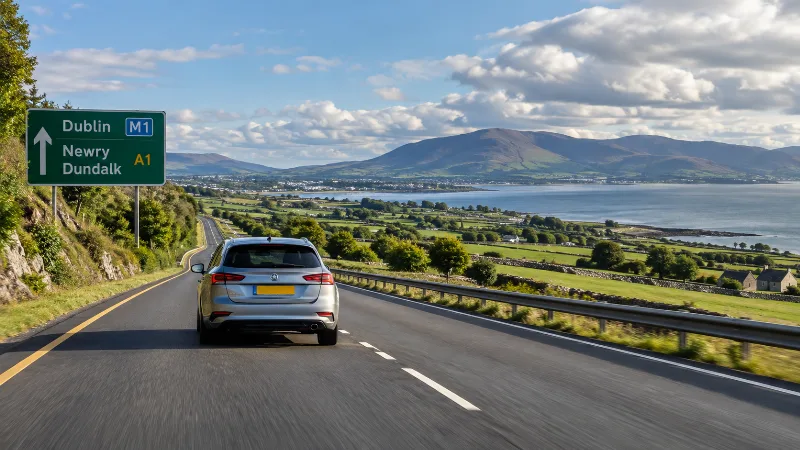
Driving a Belfast Rental Car to Dublin
Check permission and rules for a cross-border rental journey.
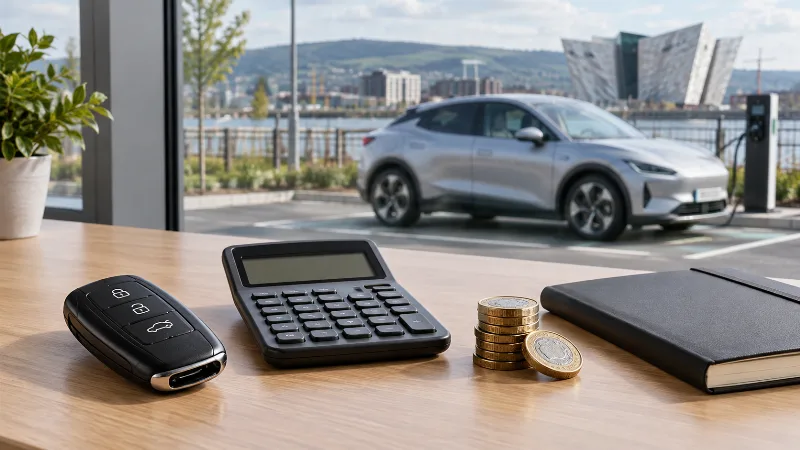
Electric Car Hire Costs in Northern Ireland: What to Budget For
A breakdown of electric rental costs in Northern Ireland, covering the hire price, electricity calculations, parking, deposits and return charges.
Electric Car Hire in Northern Ireland
Electric vehicle rental in Northern Ireland, including Belfast collection locations, vehicle categories, charging arrangements and rental terms.
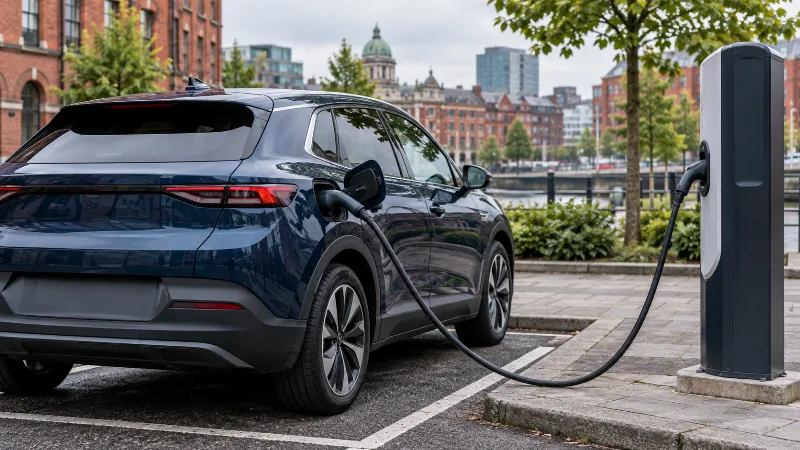
How to Charge an Electric Hire Car in Northern Ireland
An explanation of charging an electric rental in Northern Ireland, including connectors, AC and DC charging, payment systems and charging sessions.
Electric Car Hire in Belfast
Planning an electric rental car journey in Belfast and across Northern Ireland.