First-Time Electric Car Hire in Northern Ireland: From Collection to Return
An overview of a first electric rental in Northern Ireland, describing the booking record, vehicle handover, dashboard information, charging and return.
A first electric car rental in Northern Ireland follows the same broad stages as other vehicle rentals: reservation, collection, use and return. The additional information concerns the battery, charging equipment and vehicle controls. These details form part of the handover for the model supplied.
The Reservation and Collection Record
The reservation identifies the supplier, collection location, rental dates and booked category. The rental agreement provides the contractual conditions, including authorised drivers, payment arrangements and return terms. Where an intermediary handles the reservation, the booking confirmation also identifies the company supplying the vehicle.
At collection, the vehicle condition record describes the car at the beginning of the hire. For an electric rental, the battery percentage and supplied charging equipment are also relevant handover details. A dashboard photograph can record the displayed charge alongside the collection time.
Vehicle Controls at Handover
Electric cars use model-specific arrangements for starting the vehicle, selecting drive or reverse, engaging park and operating the parking brake. The dashboard indicates the operating state. The location and appearance of these controls vary between manufacturers and models.
Other handover details include the charging-port release, cable storage and the controls for lights, heating and demisting. A representative’s vehicle demonstration concerns the actual car allocated to the reservation rather than the example pictured during booking.
Regenerative braking is another feature of electric driving. It allows the vehicle to recover some energy during deceleration. The available settings and the way deceleration responds to the accelerator depend on the model. The car’s manual describes the operation of its braking and driving modes.
Reading the Battery and Range Displays
The battery percentage and estimated remaining range describe different things. Percentage shows the indicated state of charge. Range presents an estimate of the distance associated with the remaining energy under the vehicle’s current calculation.
As the journey develops, the range estimate can respond to driving conditions and energy use. A motorway section, urban traffic and a change in temperature can produce different consumption patterns. The number on the display is therefore a changing estimate rather than a fixed distance attached to each percentage point.
The First Charging Session
A charging session combines the vehicle connection with the operator’s access system. Depending on the equipment, the session is authorised through an app, charging card or payment facility. The relevant displays indicate when energy is being transferred.
ESB describes both tethered equipment, with a cable attached, and untethered equipment that requires a separate cable. The rental car’s connector and charging capability establish which equipment can be used. A supplied cable remains part of the rental inventory throughout the booking.
At the end of a session, the equipment and vehicle follow a release procedure. The resulting transaction record may show the location, duration, energy delivered and charge. These receipts document electricity purchases during the rental period.
Daily Use During the Rental
The daily itinerary determines when and where the car is parked. Overnight accommodation, public car parks and charging stops during a journey create different opportunities for electricity purchases. Charging access is governed by the operator or property responsible for the location.
Cold weather can affect battery performance and range. The US Department of Energy also explains that charging power commonly reduces near a high battery percentage. These characteristics explain why the time associated with adding charge is not identical in every session.
The vehicle’s charging display, operator session record and rental agreement each serve a separate purpose. The first describes the car’s current state, the second documents electricity delivery, and the third establishes the conditions of hire.
Vehicle Return and the Final Account
The return takes place at the branch or drop-off point stated in the booking. The rental company records vehicle condition, mileage and the relevant battery level. Branch arrangements can distinguish staffed handover from a key-drop return.
Where a battery requirement applies, the return reading is assessed against the agreement. Enterprise’s EV guidance notes that branch return arrangements can differ. Any recharge service applied under the booking belongs to the final rental account.
The charging cable and other supplied items are returned with the vehicle. The completed handover closes the physical rental, while the final invoice records the services charged under the agreement. Charging receipts remain a separate record of electricity purchased during the trip.
Related content
Electric Car Hire in Belfast
Planning an electric rental car journey in Belfast and across Northern Ireland.

Electric Car Hire Costs in Northern Ireland: What to Budget For
A breakdown of electric rental costs in Northern Ireland, covering the hire price, electricity calculations, parking, deposits and return charges.
Electric Car Hire in Northern Ireland
Electric vehicle rental in Northern Ireland, including Belfast collection locations, vehicle categories, charging arrangements and rental terms.
Belfast to Dublin in an Electric Hire Car: What to Check Before You Go
Belfast-to-Dublin electric rental travel explained, including cross-border agreements, charging networks, payment arrangements and one-way returns.
How to Charge an Electric Hire Car in Northern Ireland
An explanation of charging an electric rental in Northern Ireland, including connectors, AC and DC charging, payment systems and charging sessions.
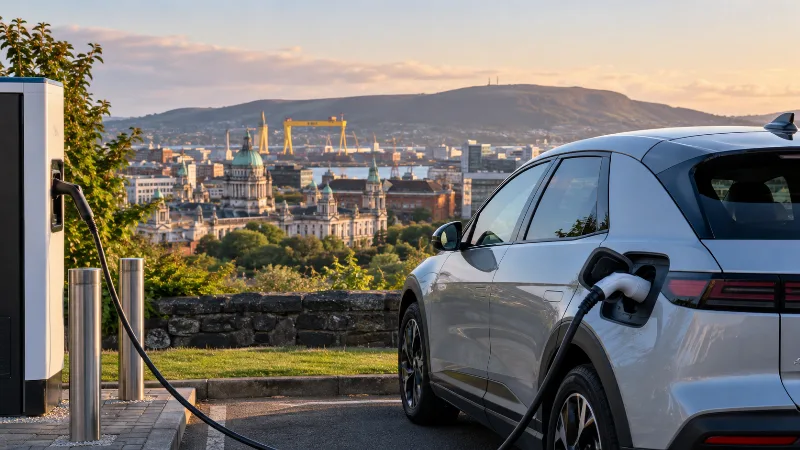
Electric Car Driving in Belfast and Beyond
Charging, range and practical planning for an electric rental in Northern Ireland.