Taking a Hire Car from Northern Ireland Across the Border into Ireland
Crossing into the Republic with a Northern Ireland hire car is usually possible, but it depends on your rental agreement and insurance cover. Here is what to check before you set off.
Driving a hire car from Northern Ireland into the Republic of Ireland is generally straightforward, but permission is not automatic. Whether you may cross, and for how long, depends on the rental agreement and the insurer's territorial cover. It is much easier to settle this when you book than to explain your plans at the collection desk with the keys already in your hand.
Confirm cross-border cover before collection
Say that you intend to drive into the Republic when you reserve the vehicle, not on the day of collection. Some agreements cover Northern Ireland and Great Britain only, with travel across the border allowed only if it has been requested in advance and noted on the paperwork. Arriving at a barrier or a border road without that arrangement in place can leave you driving uninsured.
Ask clear questions: is the Republic of Ireland included, is there an additional charge, is there a cap on how many days of the rental may be spent outside Northern Ireland, and does breakdown assistance follow you across the border? Ask for the answer to be recorded on the agreement. If the cover is limited, you may need to adjust your route or shorten the southern section of the trip.
What actually changes once you cross
Both jurisdictions drive on the left, so there is no need to alter headlamp deflectors or reposition yourself on the road. The differences sit in the details. Speed limits in the Republic are posted in kilometres per hour, while Northern Ireland uses miles per hour, and the switch happens abruptly at the border. Motorways in the Republic are generally signed at 120 km/h, and many rural roads at 80 km/h, a figure that feels slow if you are still reading signs in mph.
Signs, road markings and junction layouts change too, and smaller cross-border roads can be less clearly marked than the main routes. Fuel is sold in litres on both sides, but the currency shifts from sterling to euro, and filling stations close to the border often handle both. The emergency number 112 works throughout the island.
Tolls, mileage and documents to keep in the car
Some motorway routes in the Republic carry tolls, and the M50 around Dublin uses barrier-free tolling that is paid after the journey rather than at a booth, so note the vehicle registration if you use it. Keep the rental agreement, your driving licence and any insurance paperwork in the car. Check whether the agreement sets a mileage limit, because a cross-border detour can add distance faster than expected.
If you hope to leave the vehicle somewhere other than where you collected it, raise that at the booking stage rather than at the end of the trip. One-way arrangements across the border are often restricted, and turning up at a southern office with a northern vehicle may not be accepted.
Plan the return leg so that you cross back with time to spare, and check the fuel policy before the final fill. If the agreement requires the tank to be returned at the same level as collection, refuelling before you re-enter Northern Ireland avoids hunting for a filling station near the return point. Allow extra time on the day as well: border roads can be slow, and a delayed crossing is a common reason for a late drop-off.
Related content
One-Way Car Hire from Belfast to Dublin
A guide to arranging a one-way car hire from Belfast to Dublin, covering cross-border cover, route changes and drop-off charges.
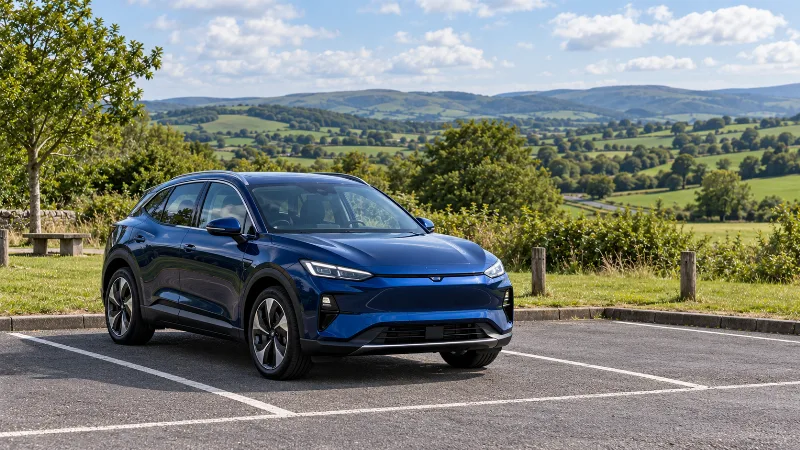
Belfast to Dublin in an Electric Hire Car: What to Check Before You Go
Belfast-to-Dublin electric rental travel explained, including cross-border agreements, charging networks, payment arrangements and one-way returns.
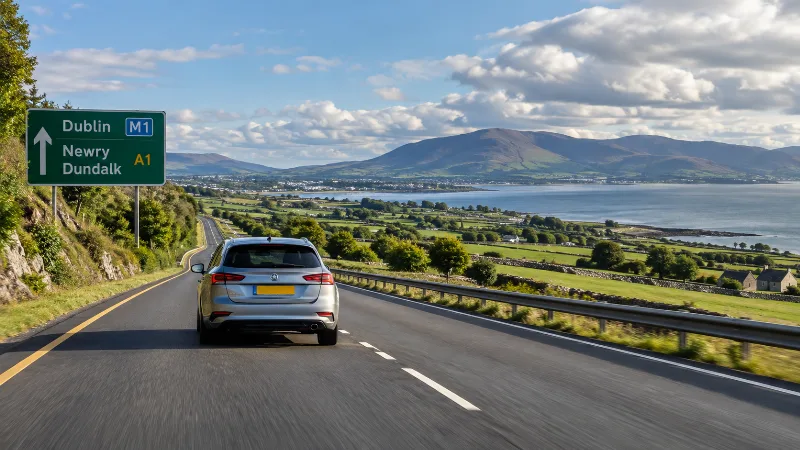
Driving a Belfast Rental Car to Dublin
Check permission and rules for a cross-border rental journey.
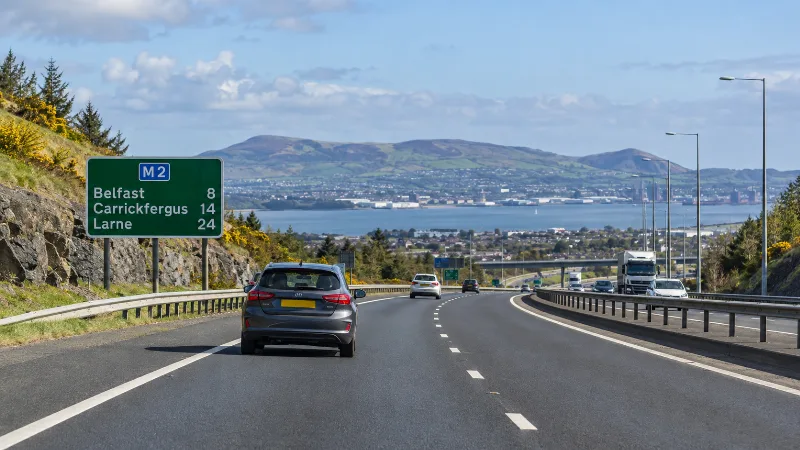
Toll Roads and Charges in Northern Ireland
Find out whether Northern Ireland has toll roads and what drivers should know before crossing into the Republic.
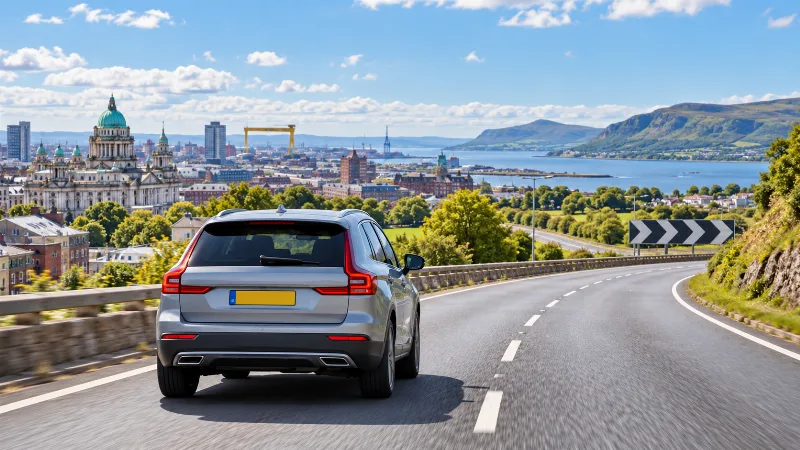
One-Way Car Hire from Belfast
A guide to collecting a rental in Belfast and returning it elsewhere.
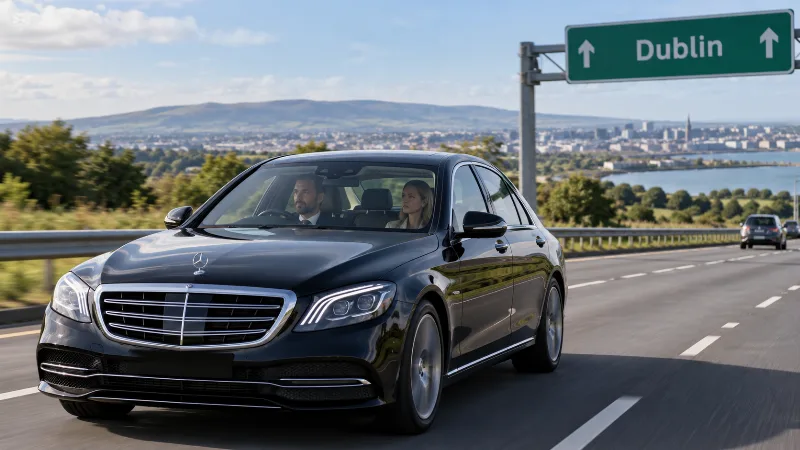
Belfast Airport Transfers to Dublin
Plan trips from Belfast airports towards Dublin and confirm cross-border journey details.
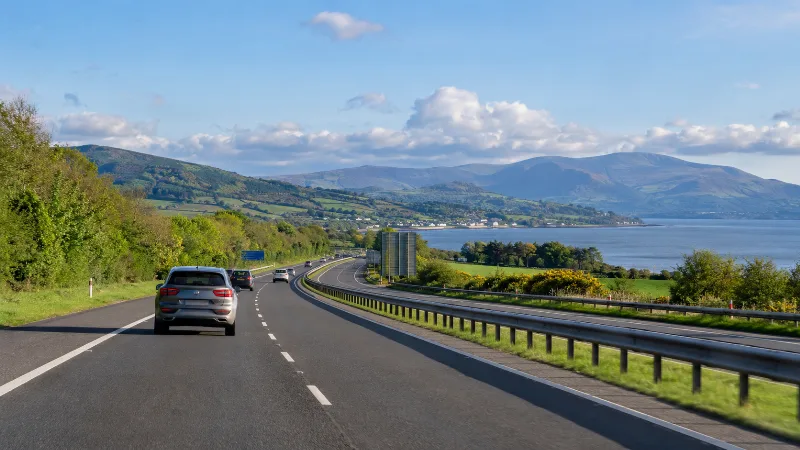
Driving from Belfast to Dublin
Understand cross-border driving, rental permissions and road-sign differences.
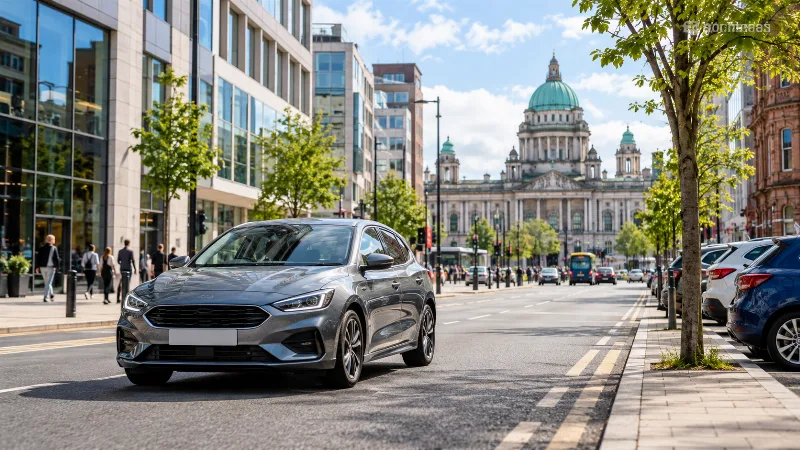
Belfast City Centre Car Hire
How to plan city-centre car collection, parking and onward journeys from Belfast.