Belfast Car Hire for Driving on Narrow Country Roads
Country lanes around Belfast reward patience and forward planning. Here is how to handle single-track stretches, passing places and farm traffic calmly in a hire car.
Collecting a hire car in Belfast opens up some of the most rewarding scenery in Northern Ireland, but the rural lanes that lead to it behave very differently from city streets or dual carriageways. A little preparation before you leave the urban edge makes narrow road driving far calmer and safer.
Single-track roads and passing places
Many country routes outside Belfast reduce to a single lane with occasional wider areas laid out as passing places. The unwritten rule is straightforward: whoever reaches a passing place first uses it, and the driver with the shorter distance to reverse gives way. Pull into the passing place on your left. If the space sits on your right, stop level with it rather than directly opposite, so the oncoming vehicle can swing in.
Never pause in a passing place to check a map or take a photograph — they are the working passing space for everyone. A brief wave of thanks is widely expected and costs nothing. If you meet another vehicle between passing places, the driver nearest one usually reverses, so look well ahead on blind stretches and keep your speed low enough to react.
Reading the surface and the bends
High hedges, stone walls and raised banks cut sightlines sharply in Northern Ireland rural driving, so slow down before a bend rather than through it. Expect mud and slurry near farm gates, loose gravel along the centre of the road, fallen leaves in autumn and standing water after heavy rain. Puddles often hide potholes or a crumbling edge, which is another reason to travel at a pace that lets you stop within the distance you can see.
The middle of a narrow lane frequently carries a strip of debris; the smoothest line is usually just outside it, without drifting towards the verge. Dark tyre marks can hint at where a vehicle has recently lost grip on a wet surface.
Livestock, farm machinery and people on foot
Sheep and cattle roam freely on some upland routes and near unfenced farms. Reduce speed, be ready to stop and avoid sounding the horn, which can scatter animals unpredictably. Tractors, trailers and wide machinery are a common sight and need generous room — wait for a clear stretch instead of squeezing past. Cyclists, walkers and horse riders share these lanes because there is often no pavement at all, so pass wide and slowly and give horses plenty of space.
Before you set off
Satellite navigation is helpful but not infallible: it may send you down a lane that is barely suitable for a car, so trust what you can actually see. Rural roads are frequently unlit, junctions may lack markings, and filling stations can be far apart, so check fuel and lights before leaving town. If a stretch feels beyond your comfort, turn back at a wide gateway or junction — far easier than reversing a long way later. Allowing more time than the map suggests turns the drive into part of the day rather than something to endure.
Related content
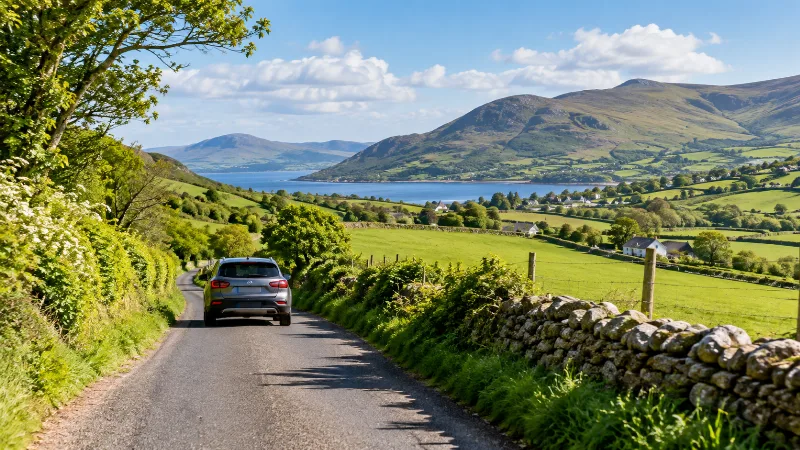
Rural Roads in Northern Ireland
What to expect on narrow countryside roads and how to plan scenic drives.
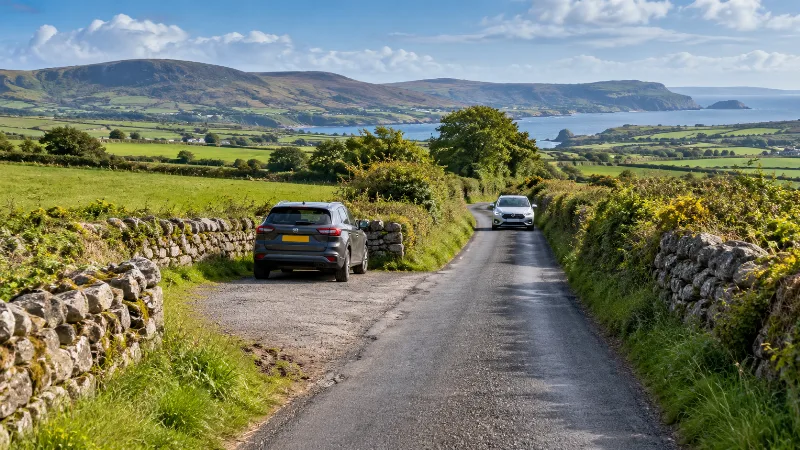
Single-Track Roads and Passing Places in Northern Ireland
Learn how to use passing places, meet oncoming traffic and navigate narrow country lanes in Northern Ireland.
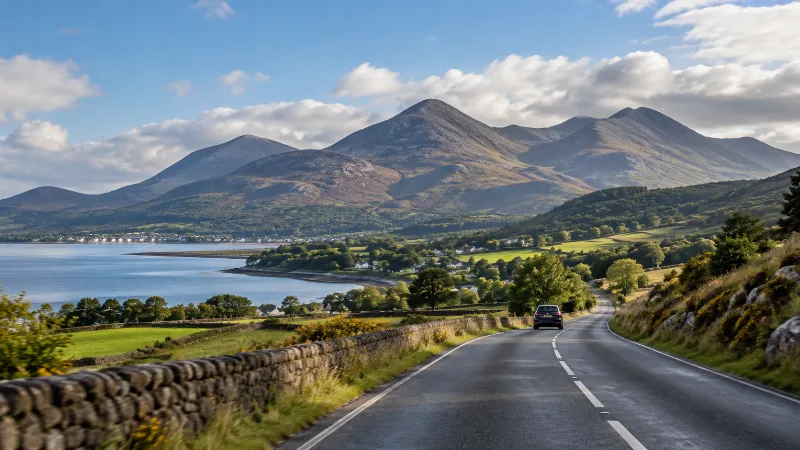
Driving from Belfast to the Mourne Mountains
Plan the drive from Belfast to the Mourne Mountains, including the Newcastle approach and rural road considerations.
Driving in Northern Ireland After Dark
Practical guidance to help plan driving in Northern Ireland After Dark. Compare your options, review key details and prepare for a smoother visit to.
Understanding Rural Road Passing Places
Practical guidance to help plan understanding Rural Road Passing Places. Compare your options, review key details and prepare for a smoother visit to.
Driving from Belfast to Dark Hedges
Practical guidance to help plan driving from Belfast to Dark Hedges. Compare your options, review key details and prepare for a smoother visit to Northern.
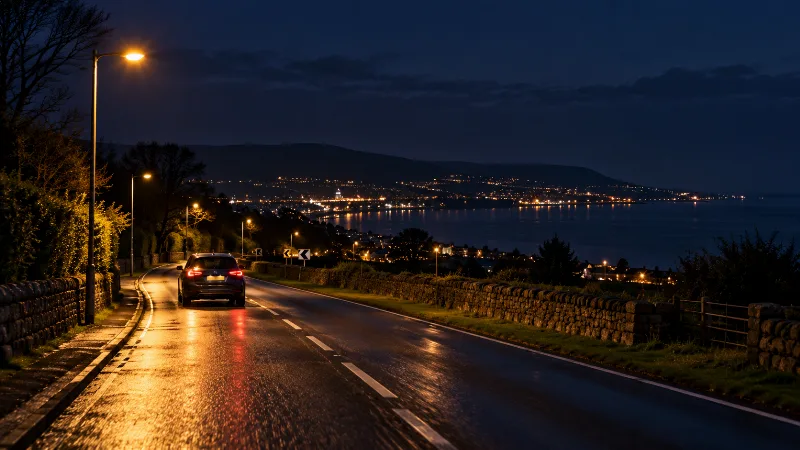
Driving at Night in Northern Ireland
Practical guidance on headlights, visibility, unfamiliar roads and driver fatigue after dark in Northern Ireland.
Renting a Car for a Northern Ireland Road Trip
Practical guidance to help plan renting a Car for a Northern Ireland Road Trip. Compare your options, review key details and prepare for a smoother visit to.