Motorway Driving Rules for Hire Cars in Northern Ireland
A practical guide to the motorway rules that apply when driving a hire car in Northern Ireland, covering speed limits, lane discipline, breakdown procedure and vehicle checks before you set off.
Northern Ireland's motorway network is short and compact, with the M1, M2, M3, M5, M12 and M22 linking Belfast to nearby towns and onward routes. Because many journeys involve only a few junctions, drivers collecting a hire car near the city may find themselves on a motorway sooner than expected. Knowing the local rules in advance makes the drive calmer and safer.
Speed limits and restrictions
The motorway speed limit for cars and motorcycles in Northern Ireland is 70 mph. A car towing a trailer is limited to 60 mph on motorways, and any lower figure shown on a circular sign with a red border is the maximum for that stretch, regardless of the general limit. Speed is measured in miles per hour, so check that you are reading the hire car's speedometer in miles rather than kilometres.
Drivers who passed their driving test in Northern Ireland must display R plates for a full year after passing and are restricted to 45 mph during that period, including on motorways. If you are a visitor using a licence issued elsewhere, different conditions apply, but it is worth confirming the position before you drive.
Joining, lane discipline and leaving
Use the slip road to build up speed so that you can merge smoothly with traffic already on the carriageway, and give way to vehicles already there. Once on the motorway, keep to the left-hand lane unless you are overtaking. The right-hand lane is an overtaking lane, not a cruising lane, and you should return left once it is safe. Weaving between lanes gains very little time and unsettles surrounding traffic.
Leave a gap of at least two seconds behind the vehicle in front in dry conditions, and considerably more in rain or spray. When leaving, signal in good time and move to the left lane before the exit slip road begins. If you miss a junction, continue to the next one; stopping on the carriageway or reversing along the hard shoulder is both illegal and extremely dangerous.
Hard shoulder and breakdowns
The hard shoulder is reserved for genuine emergencies. If the car develops a fault, pull as far left as you can, switch on the hazard warning lights and leave the vehicle through the left-hand doors, waiting behind the safety barrier rather than beside the traffic. Emergency telephones along the motorway connect directly to a control centre and give your exact location, which is useful if you are unsure where you are.
Once you are in a safe position, contact the hire company's breakdown number so that recovery can be arranged. Learner drivers, cyclists, pedestrians, horse riders and slow-moving agricultural vehicles are not permitted to use motorways, so these will not be encountered on the carriageway.
Checks before setting off
Confirm the fuel level, tyre pressures and washer fluid before joining a motorway, and make sure lights work correctly, since several stretches are unlit. Northern Ireland's motorways carry no tolls, so no payment is needed at any point. Traffic approaching Belfast can be heavy at commuting times, so allow flexibility and keep your attention on the road rather than on a timetable.
Related content
Car Hire Excess Insurance in Northern Ireland
A practical guide to how the damage excess works on a hire car in Northern Ireland, what an excess waiver actually changes, and which details are worth checking before you collect a vehicle.
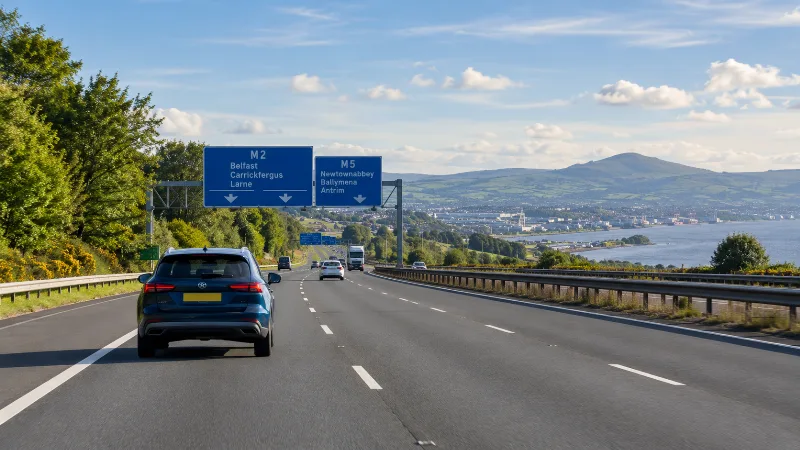
Motorway Driving in Northern Ireland
Prepare for motorway journeys, exits and changes in road conditions.
Toll Roads and Charges in Northern Ireland
Find out whether Northern Ireland has toll roads and what drivers should know before crossing into the Republic.
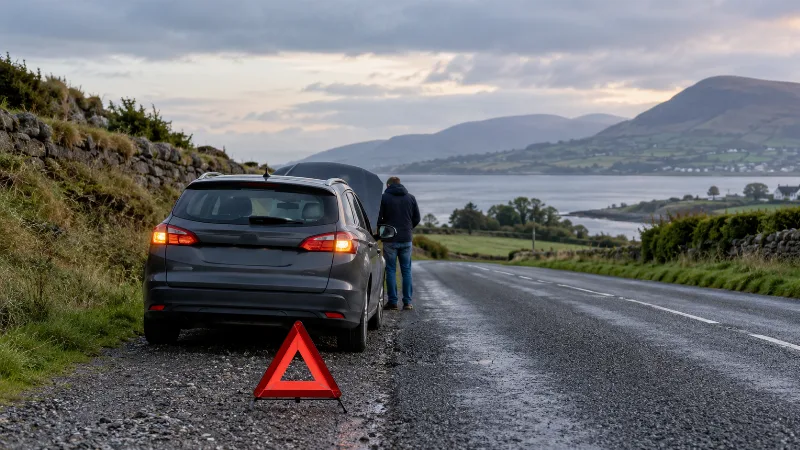
What to Do If Your Car Breaks Down in Northern Ireland
Practical steps for dealing with a roadside vehicle breakdown in Northern Ireland, including safe stopping and help.
Compact Cars vs SUVs for Northern Ireland Travel
Practical guidance to help plan compact Cars vs SUVs for Northern Ireland Travel. Compare your options, review key details and prepare for a smoother visit.
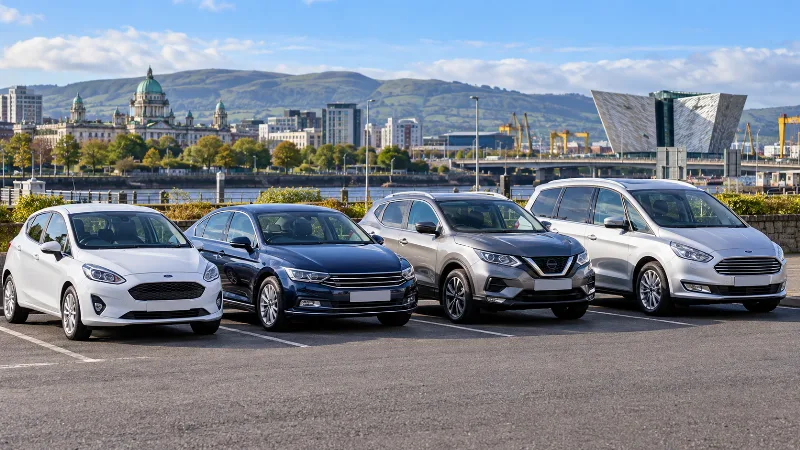
Choosing the Right Rental Car Size
Match the car to travellers, luggage and local roads.
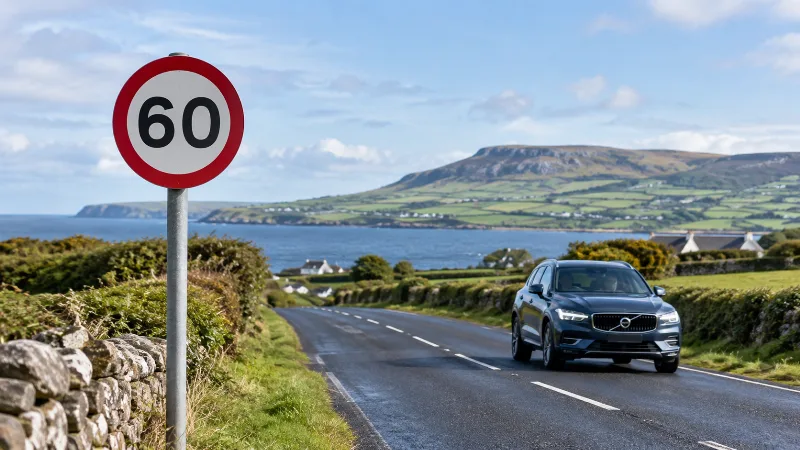
Northern Ireland Speed Limits Explained
How visitors can read speed limits and adapt to different road conditions.
Belfast Car Hire for Drivers Under 25
A practical guide to renting a car in Belfast when you are under 25, covering age surcharges, eligible vehicle groups, deposits and collection checks.