Pedestrian Crossings and Traffic Lights in Northern Ireland
Understand pedestrian crossing types, traffic light sequences and safe approaches to junctions in Northern Ireland.
Traffic lights and pedestrian crossings in Northern Ireland follow familiar UK-style systems, but drivers visiting from elsewhere may not recognise every type of crossing. Understanding the signals helps at busy urban junctions and on quieter streets where pedestrians may step into the road unexpectedly.
Reading traffic lights correctly
A red light requires drivers to stop behind the stop line. Red and amber together still mean stop; moving is not permitted until the green signal appears. Green allows movement only when the way is clear. An amber light requires stopping unless you have already crossed the line or are so close that stopping could cause a collision.
A green filter arrow permits movement in the direction indicated, subject to the way being clear. Watch for pedestrians who may still be completing a crossing when signals change. At junctions, avoid edging into a crossing while waiting for a gap in other traffic.
Different pedestrian crossings
At a zebra crossing, drivers must give way once a pedestrian has moved onto the crossing and should be ready to stop when someone is waiting to cross. White zigzag markings nearby help protect visibility and must not be treated as ordinary parking spaces.
Pelican crossings use traffic lights, including a flashing amber stage after red. During flashing amber, drivers must give way to pedestrians still on the crossing and may proceed cautiously only when it is clear. Puffin crossings use sensors and do not have the same flashing amber sequence. Toucan crossings are designed for both pedestrians and cyclists.
You do not need to memorise a technical label before reacting safely. Slow on approach, observe the signals and leave people enough time to finish crossing.
Driving through pedestrian areas
Look beyond the traffic light itself. People may emerge from between parked cars, approach from a bus stop or begin crossing close to a turning vehicle. When turning into a side road, check carefully for pedestrians using or approaching the junction.
Do not wave someone across if another lane of traffic is still moving. A well-intended gesture can create confusion or give the impression that the whole road is safe. Avoid sounding the horn to pressure someone into crossing faster.
In rain or darkness, allow longer stopping distances and give crossings more attention. Road markings can reflect headlights or become less obvious on wet surfaces, but the obligation to respond to signals and people on the road remains the same.
Related content
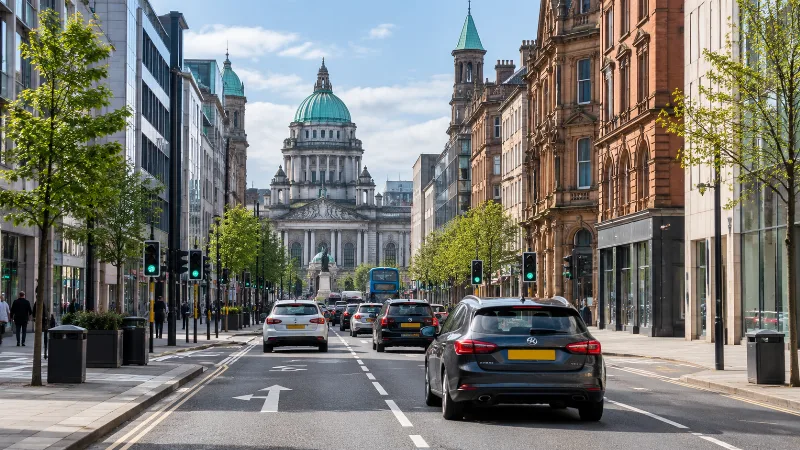
Driving in Belfast City Centre: Traffic and Access
Understand city-centre traffic, street access, junctions and parking decisions when driving through central Belfast.
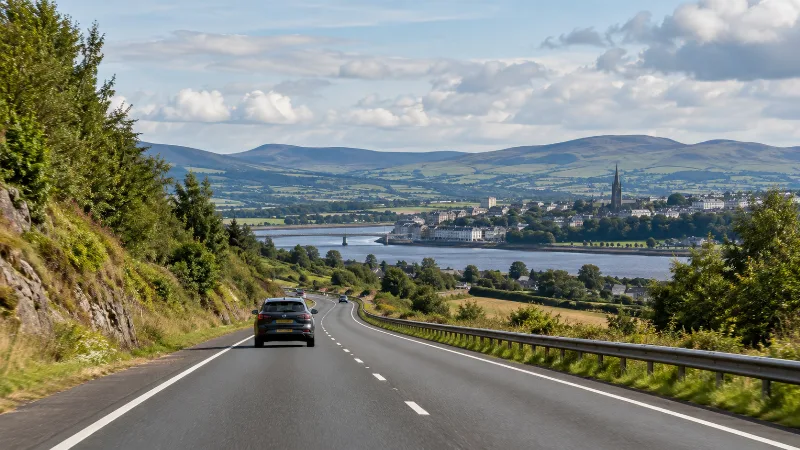
Driving from Belfast to Derry/Londonderry
A practical guide to travelling by car between Belfast and Derry/Londonderry, covering routes and arrival planning.
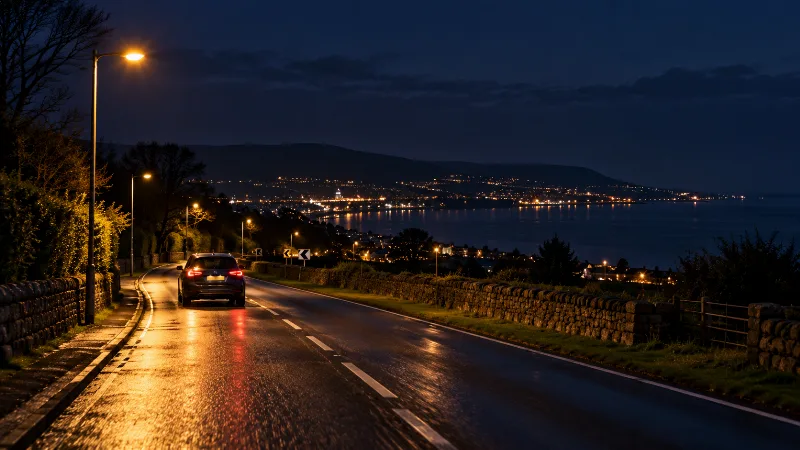
Driving at Night in Northern Ireland
Practical guidance on headlights, visibility, unfamiliar roads and driver fatigue after dark in Northern Ireland.
Driving in Belfast: A Practical Visitor Guide
Understand road layouts, local traffic and practical driving choices in Belfast.
Driving Through Belfast City Centre
Practical guidance to help plan driving Through Belfast City Centre. Compare your options, review key details and prepare for a smoother visit to Northern.
Driving in Northern Ireland After Dark
Practical guidance to help plan driving in Northern Ireland After Dark. Compare your options, review key details and prepare for a smoother visit to.