
Late-Night Airport Transfers in Belfast
Explore late-night arrival planning at Belfast airports, from reduced transport services to safe collection points and accommodation access.
Why late arrivals need separate planning
A flight that reaches Belfast after dark can produce a different onward journey from the same flight arriving in the afternoon. Bus and rail frequency may be reduced, transport desks may have limited opening periods and accommodation reception arrangements can vary. The situation also depends on which airport is involved: Belfast International Airport is outside the city, while Belfast City Airport is close to central Belfast. Passengers should not assume that travel arrangements available at midday will operate in exactly the same way late at night.
Confirming the actual arrival time
Scheduled touchdown is not the same as leaving the terminal. Baggage reclaim, aircraft disembarkation and any applicable checks create a gap between the flight time and the practical collection time. A delay can move an arrival beyond the last useful public transport connection. Passengers using a pre-arranged vehicle should review how waiting time is handled and what happens when an aircraft arrives after the stated collection window. It is useful to keep the flight number and an accessible contact method available.
After-hours public transport
Airport bus services may provide evening options, but departures need to be checked against the exact date and airport. A passenger who reaches a central interchange late at night must also consider whether the next local service is still running. The last mile to a hotel or residential address can be more difficult than the airport-to-city portion. Travellers should review final stops, walking routes and the feasibility of carrying luggage. An itinerary with two late changes deserves more scrutiny than one with a single through service.
Meeting a vehicle safely and clearly
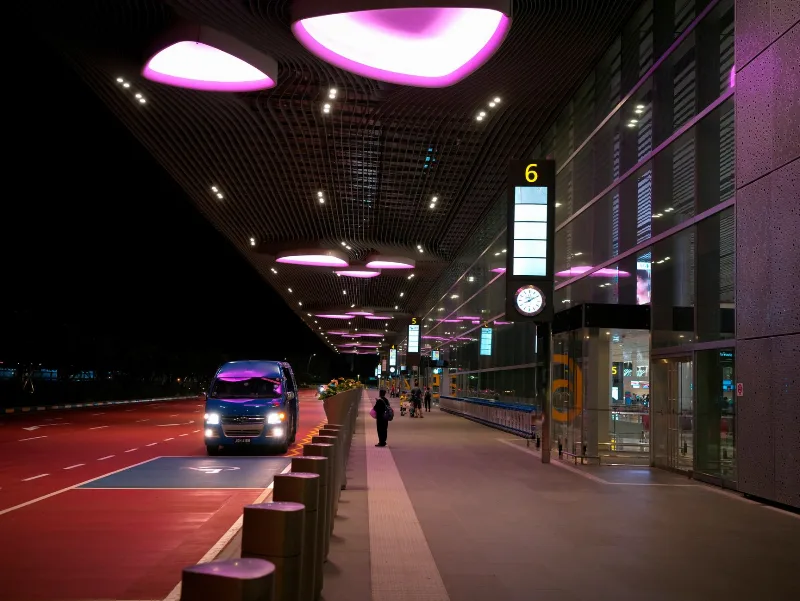
A late-night collection is easier when the meeting point is specified in advance. Airports may distinguish pick-up bays, taxi ranks, short-stay parking and rental-car desks, and passengers should follow the actual arrangement for their booking. A vague instruction to meet outside may cause confusion where exits or lanes are busy. Keep phones charged and do not assume unrestricted vehicle access to the terminal frontage. If travelling as a group, agree where everyone will gather before leaving the arrivals building.
Accommodation and onward access
Arrival after midnight can fall on the calendar day following a booking’s nominal arrival date. Check that the accommodation expects a late check-in and that access instructions will remain valid. Rural properties and smaller guesthouses may use different arrangements from continuously staffed hotels. Travellers should not assume food, public facilities or local shops will remain open. For people arriving with children, a direct route to accommodation may be more manageable than a long wait for onward services.
Planning for disrupted travel
If a flight is delayed or diverted, review how the onward transport booking can be updated and whether any supplementary charges apply. Public transport timetables should be checked again rather than relying on a saved screenshot. Where the original plan becomes impractical, assess alternatives from the actual airport of arrival. Keep essential contact details, accommodation instructions and any reservation references accessible without relying solely on a mobile connection. Late-night flexibility starts with understanding the limits of the planned journey.
This article is provided for general information only. Routes, journey times, availability and transport arrangements may vary. Details should be verified with the relevant transport provider before travel.
Related content
Late-Night Airport Transfers in Belfast
Practical guidance to help plan late-Night Airport Transfers in Belfast. Compare your options, review key details and prepare for a smoother visit to.
Early-Morning Airport Transfers in Belfast
Practical guidance to help plan early-Morning Airport Transfers in Belfast. Compare your options, review key details and prepare for a smoother visit to.
Belfast Airport Late Night Car Hire Return
Returning a hire car after dark at Belfast's airports depends on knowing the out-of-hours arrangements in advance. Here is how key drops, condition checks and parking usually work.

Cheap Airport Transfers in Belfast
Compare lower-cost airport travel without overlooking the total journey.

Belfast Airport Transfers to Dublin
Plan trips from Belfast airports towards Dublin and confirm cross-border journey details.
Belfast Airport Transfers to Armagh
Plan transport from Belfast airports to Armagh, covering regional road access, bus connections and city-centre destinations.