
Early-Morning Airport Transfers in Belfast
Prepare for an early Belfast flight by checking first transport departures, airport access, baggage requirements and departure timing.
Working backwards from the flight
An early flight creates a fixed deadline that should determine when a traveller leaves their accommodation. The relevant time is not only the scheduled departure but also the airline’s check-in, bag-drop and security requirements. Belfast International Airport and George Best Belfast City Airport are separate locations, and their road approaches differ. A passenger staying near the city centre should calculate the journey to the correct airport rather than using a generic “Belfast airport” estimate. The first suitable transport service may not match the required airport arrival time.
Checking the first bus or train
Early public transport availability varies by route, operating day and season. Some passengers may have a direct airport bus option, while others need to reach a central interchange first. A train that starts later than expected can make a rail-based itinerary unsuitable for a very early departure. Those relying on an overnight service should verify that it is operating on their specific date. Sunday and public holiday schedules may differ from weekday patterns, so a timetable from an ordinary working day is not sufficient.
Accommodation collection arrangements
For an early road collection, the exact property entrance and agreed pick-up point matter. Hotels may have multiple doors, parking forecourts or restricted loading spaces, while residential streets can be difficult to identify in darkness. A traveller staying in a rural property should give access instructions if the entrance is not obvious from the postcode. Confirming the correct airport, passenger count and number of bags reduces the chance of a mismatch. A practical plan should also allow time for boarding and loading rather than treating collection as instantaneous.
Preparing the evening before
Several small tasks are easier before the day of travel: check flight status, identify the route, pack travel documents and confirm baggage allowances. Travellers using a rental vehicle should understand the provider’s out-of-hours return procedure and how to reach the terminal from the return location. A journey involving child seats or oversized luggage can take longer to load. People with mobility requirements should verify that the arranged vehicle or public transport service is suitable at the intended hour, not merely available in general.
Road conditions before dawn
Roads may be quieter in some early periods, but that does not eliminate risks from roadworks, adverse weather or temporary restrictions. Departure from a city-centre hotel can also require navigating one-way streets and access controls. A longer journey from the Causeway Coast or western Northern Ireland needs a larger buffer than a short trip from central Belfast. Flight departure screens may change after a traveller leaves home, so checking authoritative updates close to departure can be useful. Any early start should preserve sufficient time for unexpected delays.
Choosing a workable plan
The most appropriate option is the one that gets the traveller to the correct terminal within the airline’s stated reporting window. Cost comparisons are less useful if an apparently economical service departs too late or requires an uncertain connection. A direct vehicle may reduce interchange risk, while scheduled transport can be suitable where the first departure is early enough. A completed plan includes collection, road or rail travel, airport arrival, bag drop and security rather than stopping at the airport boundary.
This article is provided for general information only. Routes, journey times, availability and transport arrangements may vary. Details should be verified with the relevant transport provider before travel.
Related content
Early-Morning Airport Transfers in Belfast
Practical guidance to help plan early-Morning Airport Transfers in Belfast. Compare your options, review key details and prepare for a smoother visit to.
One Day in Belfast City Centre
A flexible one-day Belfast city centre itinerary with a morning market visit, civic landmarks, shopping and an evening in the cultural quarters.
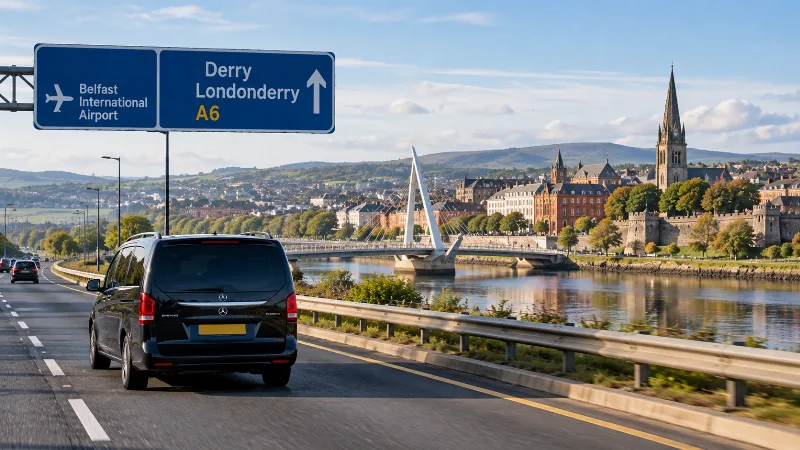
Belfast Airport Transfers to Derry/Londonderry
Compare onward travel from Belfast airports to Derry/Londonderry.

Belfast Airport Transfers
Compare practical ways to travel from Belfast’s two airports to the city and beyond.

Belfast Airport Transfers to Ballymena
Consider airport-to-Ballymena journeys by road or public transport, including regional rail, luggage and return-flight planning.
Belfast City Centre Car Hire Office Opening Hours
City centre car hire branches in Belfast tend to follow business-district hours rather than airport-style round-the-clock schedules. Knowing how weekdays, weekends and public holidays differ makes collection and return far easier to plan.